Showing posts with label asteroid. Show all posts
Oumuamua it's not an asteroid, it is a spaceship!
Discovered earlier this year, the curios find was hailed as the first object to have entered into our solar system from somewhere else in space. Along with sparking the imagination of UFO enthusiasts, Oumuamua unique origin story also apparently caught the attention of astronomers with the Breakthrough Listen project.
The SETI endeavor backed by a Russian billionaire has announced plans to 'listen' to the historic asteroid starting this coming Wednesday...in an attempt to see if they can detect radio signals emanating from him.
In a rather remarkable email, reported by the Atlantic, the head of Harvard's astronomy department who serves as an advisor to the project made an observation that is likely to send ET fans' hearts souring.
''The more I study this object, the more unusual it appears, making me wonder wether it might be an artificially made probe which was send by an alien civilization,'' professor Avi Loeb wrote. ''Perhaps the aliens have a mothership that travels fast and releases baby spacecraft that freely fall into planetary systems on a reconnaissance mission.''
''Even if we find an artefact that was left over - some space device or junk from an alien civilization - and there are no signs of life on it, that would be the greatest thrill I can imagine having in my lifetime,'' he says. It's really one of the fundamental questions in science, perhaps the most fundamental: are we alone?''
Source: dailymail
Chelyabinsk-sized asteroid set to pass between Earth and the Moon
Here is another newly found asteroid set to pass very close to our planet.
Asteroid 2017 BS32 set to pass between Earth and the Moon Feb. 02. The space rock was first observed by Catalina Sky Survey on 2017-01-30.
It will fly by Earth at a distance of 161280 km which is about 0.4 times the distance to the Moon at a speed (relative to the Earth) of 11.57 km/s. It is estimated to be 11 m - 26 meters in size. It has a condition code of 7 belongs to a group of asteroids, named Aten.
Asteroid explodes over Arizona, June 2, 2016
For a few seconds early Thursday, night turned into day as an extremely bright fireball lit the pre-dawn sky over much of Arizona , blinding all-sky meteor cameras as far away as western New Mexico.
Based on the latest data, a small asteroid estimated at 10 feet in diameter with a mass in the tens of tons and a kinetic energy of approximately half a kiloton - entered Earth's atmosphere above Arizona just before 4 a.m. local (MST) time. NASA estimates that the asteroid was moving at about 40,200 miles per hour (64,700 kilometers per hour).
''There are no reports of any damage or injuries - just a lot of light and few sonic booms. If Doppler data is any indication, there are almost certainly meteorites scattered on the ground north of Tucson, '' said Bill Cooke in NASA's Meteoroid Environment Office at the Marshall Space Flight Center in Huntsville, Alabama.
Source:
NASA just released new Ceres photos - Ceres gets weirder
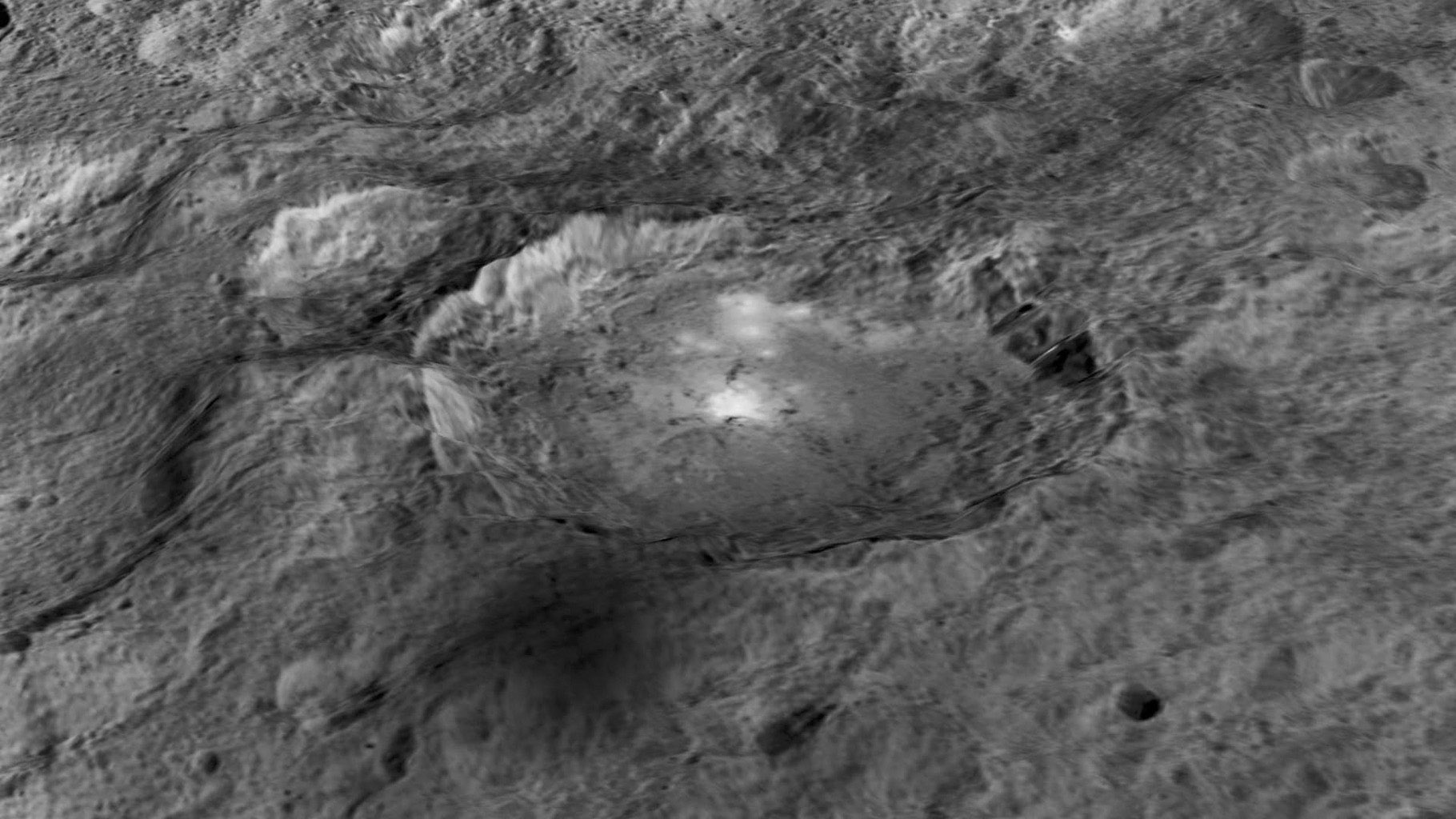
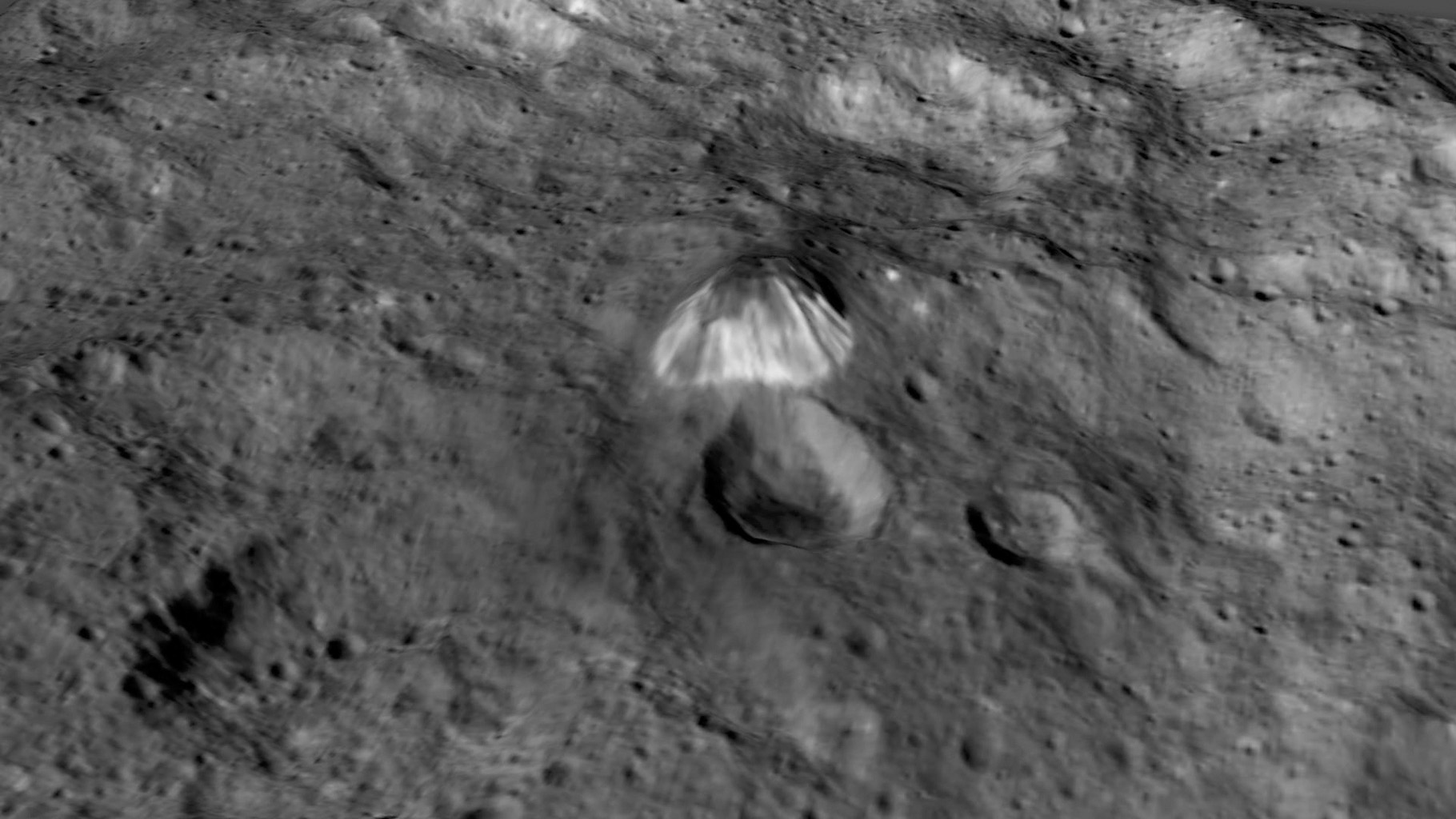
Get up close with Ceres 'weird Pyramid' and bright spots in new NASA photos. The closer we get to Ceres, the more perplexing the dwarf planet grows.
The intriguing brightest spots on Ceres lie in a crater named Occator, which is about 60 miles (90 kilometers) across and 2 miles (4 kilometers) deep.
Among the highest features seen on Ceres so far is a mountain about 4 miles (6 kilometers) high, which is roughly the elevation of Mount McKinley in Alaska's Denali National Park.
It's unusual that it's not associated with a crater. Why is it sitting in the middle of nowhere?
Ceres is the largest object in the main asteroid belt between Mars and Jupiter. Dawn will resume its observations of Ceres in mid-August from an altitude of 900 miles (less than 1,500 kilometers), or three times closer to Ceres than its previous orbit.
Link original photos:
A fireball ''as bright as the Moon'' flies over a Spanish province
On February 20, 2015, a fireball has flown over the province of Toledo, a phenomenon that was caused by the entry of a rock from an asteroid into Earth's atmosphere.
La Hita Astronomical Observatory, located in the town of La Puebla de Almoradiel, in Toledo, has recorded a fireball ''as bright as the full Moon'', which flew over the province of Toledo, reports ''ABC''.
The phenomenon recorded at 1:47 pm, on February 20, occured due to the entry into the Earth's atmosphere of a rock coming from an asteroid, according to the data obtained by the Astronomical Observatory.
Subscribe to:
Posts (Atom)